
MediLoop
Why Healthcare Recycling?
Healthcare Recycling is possible - but not implemented
Our study revealed that many common plastics within the healthcare sector can be recycled
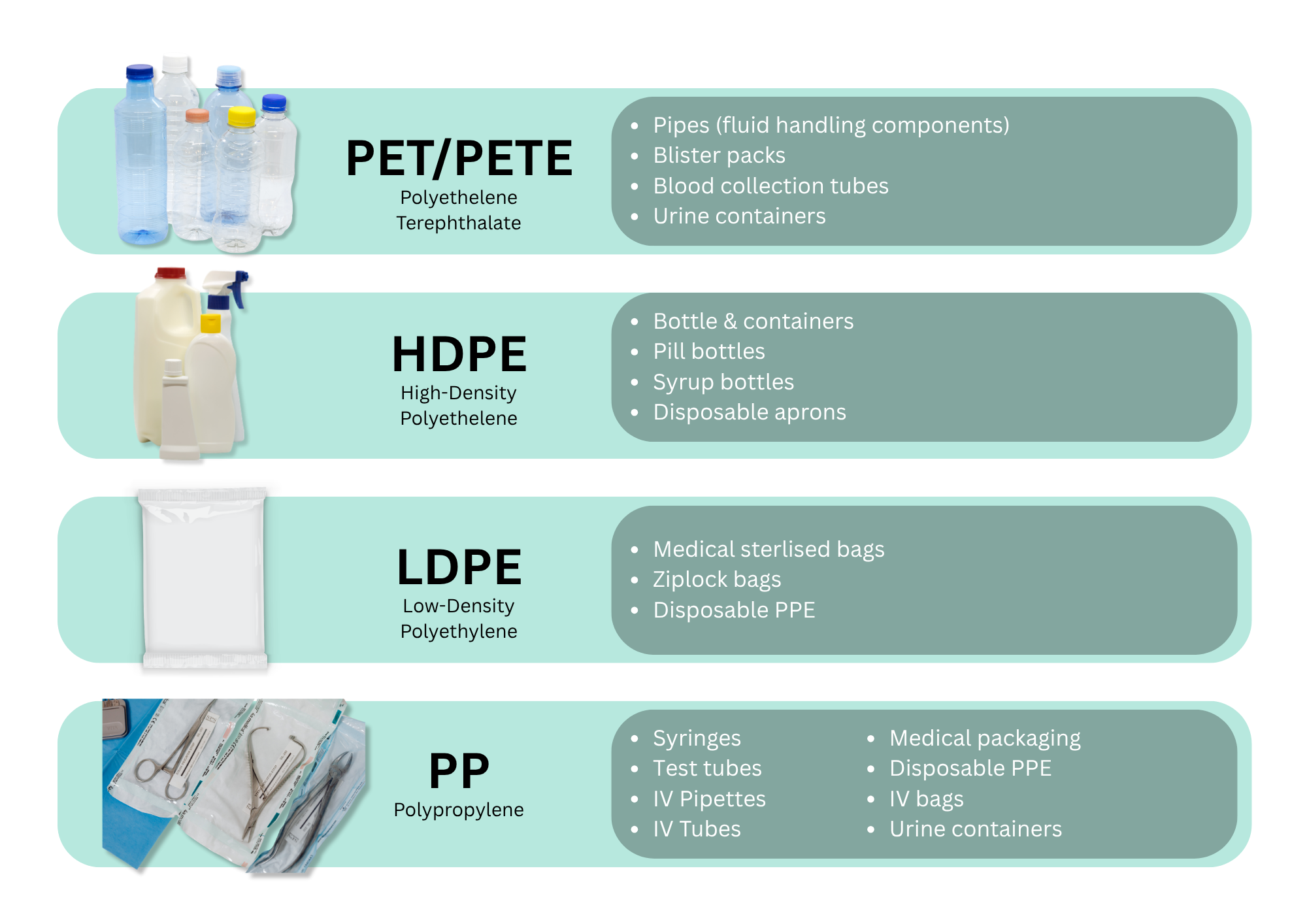
Source: Market Study for Malaysia Plastics Circularity Opportunities and Barriers by World Bank; Polyethylene terephthalate (PET) in the packaging industry by Roberto Nistico; SEA circular-Country Profile INDONESIA; Investigation into circular economy of plastics by Xin Tong; UNEN’s Global Commitment Five Years In Learnings To Accelerate Towards A Future Without Plastic Waste Or Pollution; BFFP Brand Audit Report 2023; Plastics use by application OECD Statistics; MPMA directory; TAKO Astatic product page; Wah Ngai Industries product page; Oliver healthcare packaging product page; Science Direct – Recycling of medical plastics
Our study revealed that many common plastics within the healthcare sector can be recycled
Source: Market Study for Malaysia Plastics Circularity Opportunities and Barriers by World Bank; Polyethylene terephthalate (PET) in the packaging industry by Roberto Nistico; SEA circular-Country Profile INDONESIA; Investigation into circular economy of plastics by Xin Tong; UNEN’s Global Commitment Five Years In Learnings To Accelerate Towards A Future Without Plastic Waste Or Pollution; BFFP Brand Audit Report 2023; Plastics use by application OECD Statistics; MPMA directory; TAKO Astatic product page; Wah Ngai Industries product page; Oliver healthcare packaging product page; Science Direct – Recycling of medical plastics
Our study revealed that many common plastics within the healthcare sector can be recycled
Source: Market Study for Malaysia Plastics Circularity Opportunities and Barriers by World Bank; Polyethylene terephthalate (PET) in the packaging industry by Roberto Nistico; SEA circular-Country Profile INDONESIA; Investigation into circular economy of plastics by Xin Tong; UNEN’s Global Commitment Five Years In Learnings To Accelerate Towards A Future Without Plastic Waste Or Pollution; BFFP Brand Audit Report 2023; Plastics use by application OECD Statistics; MPMA directory; TAKO Astatic product page; Wah Ngai Industries product page; Oliver healthcare packaging product page; Science Direct – Recycling of medical plastics
Healthcare facilities currently lack ward-level separation-at-source for
recyclable materials
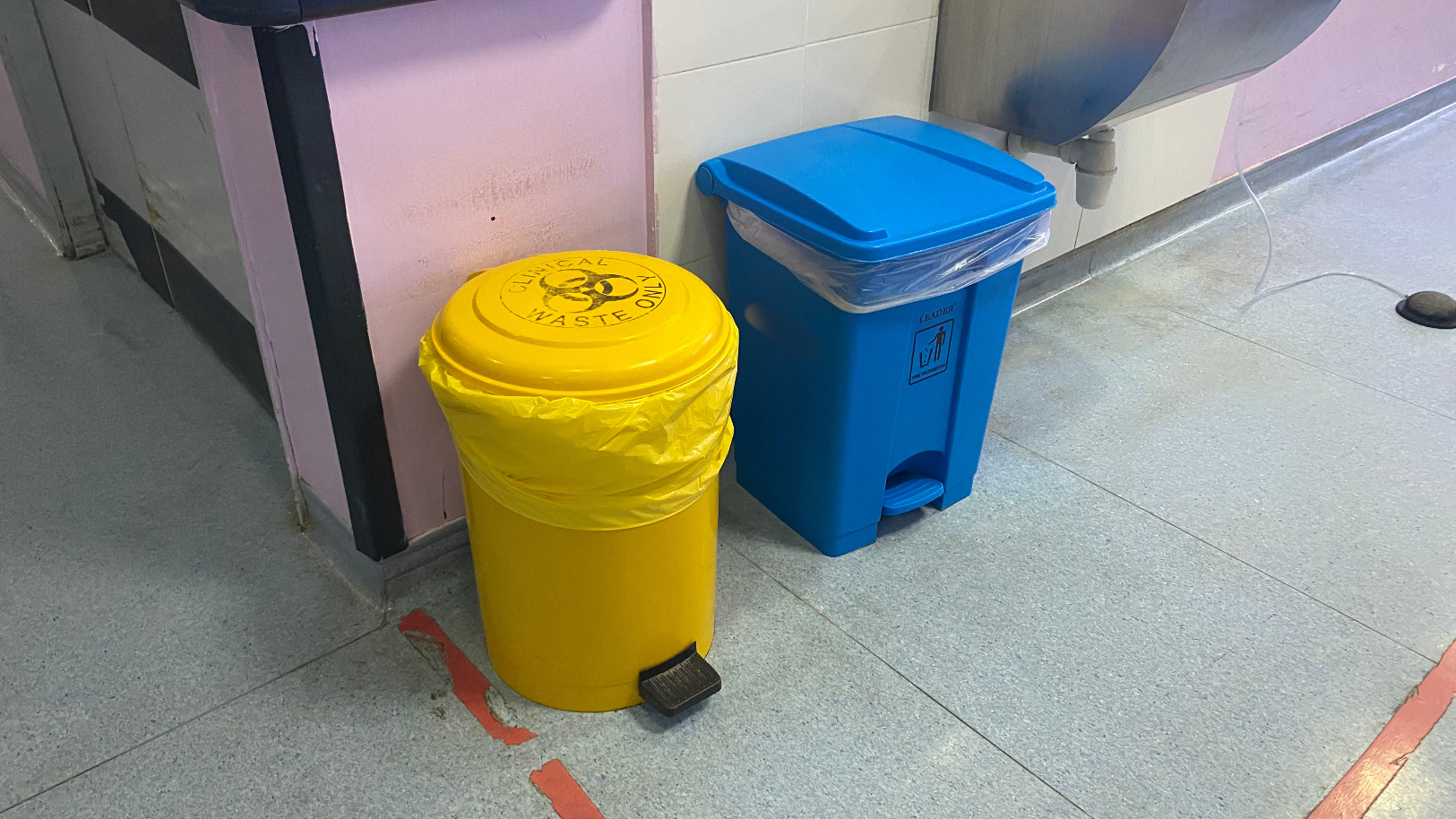
In standard healthcare settings, recyclable medical packaging faces a binary fate: it is either classified as hazardous waste or thrown into general refuse. Without structured, ward-level separation at the source, recyclable pharmaceutical plastics end up trapped in general landfill streams.
Healthcare facilities currently lack ward-level separation-at-source for
recyclable materials
In standard healthcare settings, recyclable medical packaging faces a binary fate: it is either classified as hazardous waste or thrown into general refuse. Without structured, ward-level separation at the source, recyclable pharmaceutical plastics end up trapped in general landfill streams.
Healthcare facilities currently lack ward-level separation-at-source for recyclable materials
In standard healthcare settings, recyclable medical packaging faces a binary fate: it is either classified as hazardous waste or thrown into general refuse. Without structured, ward-level separation at the source, recyclable pharmaceutical plastics end up trapped in general landfill streams.
Our study revealed that many common plastics within the healthcare sector can be recycled
Source: Market Study for Malaysia Plastics Circularity Opportunities and Barriers by World Bank; Polyethylene terephthalate (PET) in the packaging industry by Roberto Nistico; SEA circular-Country Profile INDONESIA; Investigation into circular economy of plastics by Xin Tong; UNEN’s Global Commitment Five Years In Learnings To Accelerate Towards A Future Without Plastic Waste Or Pollution; BFFP Brand Audit Report 2023; Plastics use by application OECD Statistics; MPMA directory; TAKO Astatic product page; Wah Ngai Industries product page; Oliver healthcare packaging product page; Science Direct – Recycling of medical plastics
Healthcare facilities currently lack ward-level separation-at-source for
recyclable materials
In standard healthcare settings, recyclable medical packaging faces a binary fate: it is either classified as hazardous waste or thrown into general refuse. Without structured, ward-level separation at the source, recyclable pharmaceutical plastics end up trapped in general landfill streams.
Our study revealed that many common plastics within the healthcare sector can be recycled
Source: Market Study for Malaysia Plastics Circularity Opportunities and Barriers by World Bank; Polyethylene terephthalate (PET) in the packaging industry by Roberto Nistico; SEA circular-Country Profile INDONESIA; Investigation into circular economy of plastics by Xin Tong; UNEN’s Global Commitment Five Years In Learnings To Accelerate Towards A Future Without Plastic Waste Or Pollution; BFFP Brand Audit Report 2023; Plastics use by application OECD Statistics; MPMA directory; TAKO Astatic product page; Wah Ngai Industries product page; Oliver healthcare packaging product page; Science Direct – Recycling of medical plastics
Healthcare facilities currently lack ward-level separation-at-source for
recyclable materials
In standard healthcare settings, recyclable medical packaging faces a binary fate: it is either classified as hazardous waste or thrown into general refuse. Without structured, ward-level separation at the source, recyclable pharmaceutical plastics end up trapped in general landfill streams.
Our study revealed that many common plastics within the healthcare sector can be recycled
Source: Market Study for Malaysia Plastics Circularity Opportunities and Barriers by World Bank; Polyethylene terephthalate (PET) in the packaging industry by Roberto Nistico; SEA circular-Country Profile INDONESIA; Investigation into circular economy of plastics by Xin Tong; UNEN’s Global Commitment Five Years In Learnings To Accelerate Towards A Future Without Plastic Waste Or Pollution; BFFP Brand Audit Report 2023; Plastics use by application OECD Statistics; MPMA directory; TAKO Astatic product page; Wah Ngai Industries product page; Oliver healthcare packaging product page; Science Direct – Recycling of medical plastics
Healthcare facilities currently lack ward-level separation-at-source for recyclable materials
In standard healthcare settings, recyclable medical packaging faces a binary fate: it is either classified as hazardous waste or thrown into general refuse. Without structured, ward-level separation at the source, recyclable pharmaceutical plastics end up trapped in general landfill streams.
Our study revealed that many common plastics within the healthcare sector can be recycled
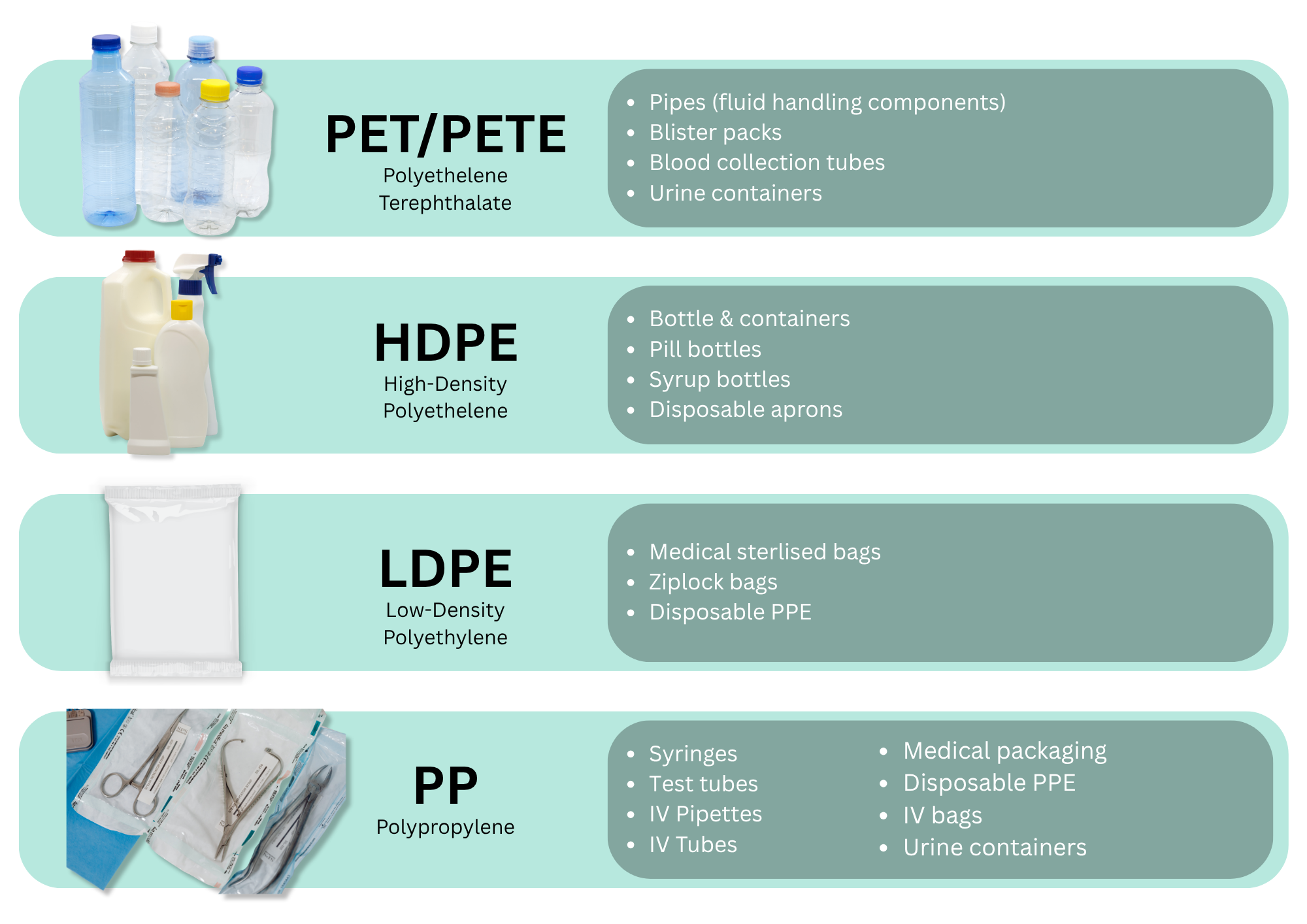
Source: Market Study for Malaysia Plastics Circularity Opportunities and Barriers by World Bank; Polyethylene terephthalate (PET) in the packaging industry by Roberto Nistico; SEA circular-Country Profile INDONESIA; Investigation into circular economy of plastics by Xin Tong; UNEN’s Global Commitment Five Years In Learnings To Accelerate Towards A Future Without Plastic Waste Or Pollution; BFFP Brand Audit Report 2023; Plastics use by application OECD Statistics; MPMA directory; TAKO Astatic product page; Wah Ngai Industries product page; Oliver healthcare packaging product page; Science Direct – Recycling of medical plastics
Healthcare facilities currently lack ward-level separation-at-source for recyclable materials
In standard healthcare settings, recyclable medical packaging faces a binary fate: it is either classified as hazardous waste or thrown into general refuse. Without structured, ward-level separation at the source, recyclable pharmaceutical plastics end up trapped in general landfill streams.
Why should Malaysia look into medical recycling?
We put our study to the test with a pilot in a public hospital
Our audit of a public Malaysian hospital's Operating Theatre's general waste bins reveal that almost 70% of the waste sent to landfill can be recycled
The possibility of medical waste collected is endless

We have identified over 1000 institutions (hospitals, clinics, labs) within the Greater KL, Penang and JB areas itself for medical waste recovery
We put our study to the test with a pilot in a public hospital
Our audit of a public Malaysian hospital's Operating Theatre's general waste bins reveal that almost 70% of the waste sent to landfill can be recycled
The possibility of medical waste collected is endless
We have identified over 1000 institutions (hospitals, clinics, labs) within the Greater KL, Penang and JB areas itself for medical waste recovery
We put our study to the test with a pilot in a public hospital
Our audit of a public Malaysian hospital's Operating Theatre's general waste bins reveal that almost 70% of the waste sent to landfill can be recycled
The possibility of medical waste collected is endless
We have identified over 1000 institutions (hospitals, clinics, labs) within the Greater KL, Penang and JB areas itself for medical waste recovery
We put our study to the test with a pilot in a public hospital
Our audit of a public Malaysian hospital's Operating Theatre's general waste bins reveal that almost 70% of the waste sent to landfill can be recycled
The possibility of medical waste collected is endless
We have identified over 1000 institutions (hospitals, clinics, labs) within the Greater KL, Penang and JB areas itself for medical waste recovery
Why should Malaysia look into medical recycling?
We put our study to the test with a pilot in a public hospital
Our audit of a public Malaysian hospital's Operating Theatre's general waste bins reveal that almost 70% of the waste sent to landfill can be recycled
The possibility of medical waste collected is endless
We have identified over 1000 institutions (hospitals, clinics, labs) within the Greater KL, Penang and JB areas itself for medical waste recovery
We put our study to the test with a pilot in a public hospital
Our audit of a public Malaysian hospital's Operating Theatre's general waste bins reveal that almost 70% of the waste sent to landfill can be recycled
The possibility of medical waste collected is endless
We have identified over 1000 institutions (hospitals, clinics, labs) within the Greater KL, Penang and JB areas itself for medical waste recovery
We put our study to the test with a pilot in a public hospital
Our audit of a public Malaysian hospital's Operating Theatre's general waste bins reveal that almost 70% of the waste sent to landfill can be recycled
The possibility of medical waste collected is endless
We have identified over 1000 institutions (hospitals, clinics, labs) within the Greater KL, Penang and JB areas itself for medical waste recovery
We put our study to the test with a pilot in a public hospital
Our audit of a public Malaysian hospital's Operating Theatre's general waste bins reveal that almost 70% of the waste sent to landfill can be recycled
The possibility of medical waste collected is endless
We have identified over 1000 institutions (hospitals, clinics, labs) within the Greater KL, Penang and JB areas itself for medical waste recovery
Why should Malaysia look into medical recycling?
We put our study to the test with a pilot in a public hospital
Our audit of a public Malaysian hospital's Operating Theatre's general waste bins reveal that almost 70% of the waste sent to landfill can be recycled
The possibility of medical waste collected is endless
We have identified over 1000 institutions (hospitals, clinics, labs) within the Greater KL, Penang and JB areas itself for medical waste recovery
We put our study to the test with a pilot in a public hospital
Our audit of a public Malaysian hospital's Operating Theatre's general waste bins reveal that almost 70% of the waste sent to landfill can be recycled
The possibility of medical waste collected is endless
We have identified over 1000 institutions (hospitals, clinics, labs) within the Greater KL, Penang and JB areas itself for medical waste recovery
We put our study to the test with a pilot in a public hospital
Our audit of a public Malaysian hospital's Operating Theatre's general waste bins reveal that almost 70% of the waste sent to landfill can be recycled
The possibility of medical waste collected is endless
We have identified over 1000 institutions (hospitals, clinics, labs) within the Greater KL, Penang and JB areas itself for medical waste recovery
We put our study to the test with a pilot in a public hospital
Our audit of a public Malaysian hospital's Operating Theatre's general waste bins reveal that almost 70% of the waste sent to landfill can be recycled
The possibility of medical waste collected is endless
We have identified over 1000 institutions (hospitals, clinics, labs) within the Greater KL, Penang and JB areas itself for medical waste recovery
Why should Malaysia look into medical recycling?
We put our study to the test with a pilot in a public hospital
Our audit of a public Malaysian hospital's Operating Theatre's general waste bins reveal that almost 70% of the waste sent to landfill can be recycled
The possibility of medical waste collected is endless
We have identified over 1000 institutions (hospitals, clinics, labs) within the Greater KL, Penang and JB areas itself for medical waste recovery
We put our study to the test with a pilot in a public hospital
Our audit of a public Malaysian hospital's Operating Theatre's general waste bins reveal that almost 70% of the waste sent to landfill can be recycled
The possibility of medical waste collected is endless
We have identified over 1000 institutions (hospitals, clinics, labs) within the Greater KL, Penang and JB areas itself for medical waste recovery
We put our study to the test with a pilot in a public hospital
Our audit of a public Malaysian hospital's Operating Theatre's general waste bins reveal that almost 70% of the waste sent to landfill can be recycled
The possibility of medical waste collected is endless
We have identified over 1000 institutions (hospitals, clinics, labs) within the Greater KL, Penang and JB areas itself for medical waste recovery
We put our study to the test with a pilot in a public hospital
Our audit of a public Malaysian hospital's Operating Theatre's general waste bins reveal that almost 70% of the waste sent to landfill can be recycled
The possibility of medical waste collected is endless
We have identified over 1000 institutions (hospitals, clinics, labs) within the Greater KL, Penang and JB areas itself for medical waste recovery

